
 Book a session
Polycystic Ovary Syndrome (PCOS) is fundamentally a metabolic and hormonal disorder, not simply a reproductive issue. When managing PCOS, the conventional advice of “just eat less and exercise more” frequently backfires. Restrictive calorie cutting spikes cortisol (the stress hormone), exacerbates insulin resistance, and makes stubborn belly fat and irregular cycles even harder to correct. A sustainable pcos diet plan works from the inside out — calming inflammation, stabilizing blood sugar, and restoring hormonal rhythm.
The Root Cause: Insulin Resistance and Chronic Inflammation
Up to 70% of women diagnosed with PCOS suffer from underlying insulin resistance. When cells become insensitive to insulin, the pancreas produces more to force glucose out of the blood. Elevated insulin directly signals the ovaries to overproduce androgens (male hormones like testosterone). This hormonal cascade leads to:
- Stubborn abdominal weight gain
- Irregular or missed menstrual cycles
- Facial hair growth (hirsutism) and hormonal cystic acne
- Sudden energy crashes and intense sugar cravings
A clinically formulated pcos diet plan directly addresses this mechanism by dampening glucose spikes after every meal.
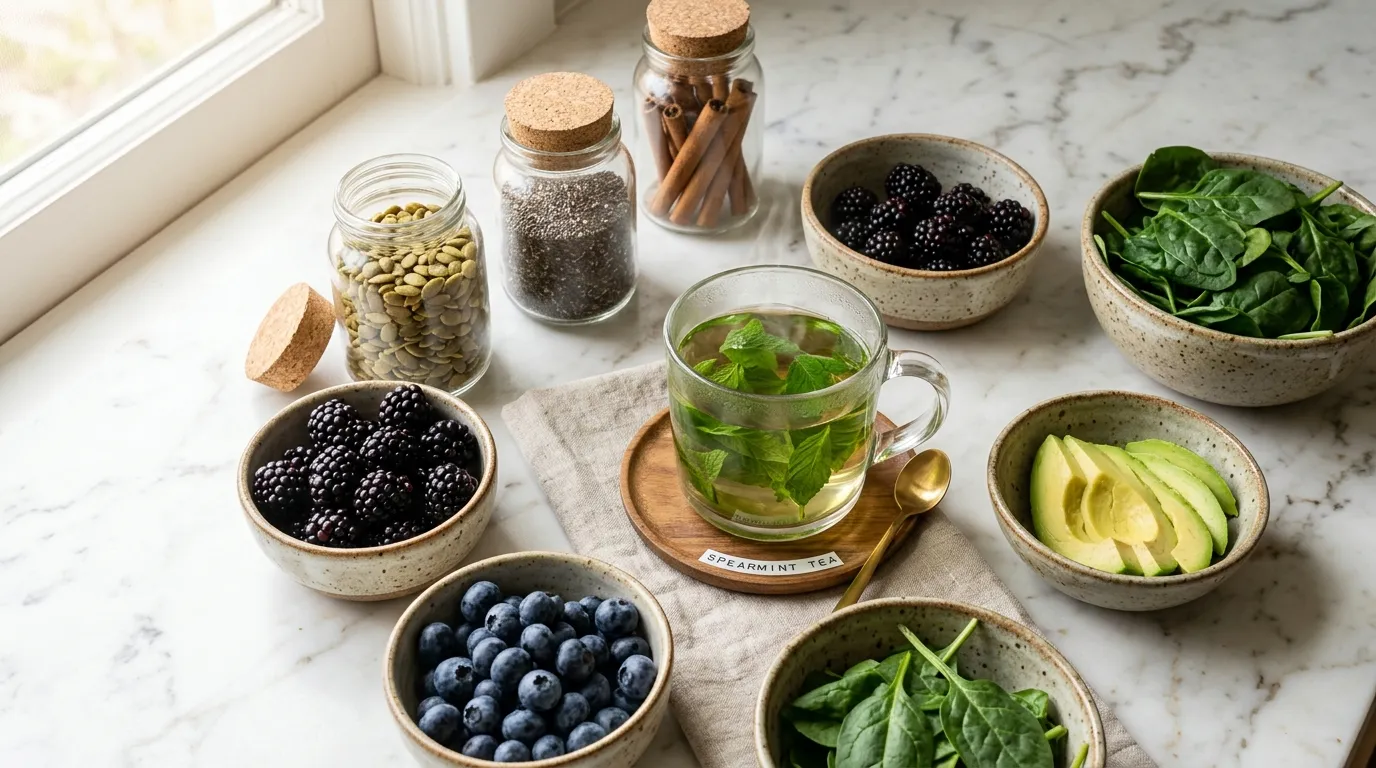 Nutrient-dense, low-glycemic foods help reduce systemic inflammation and stabilize insulin in PCOS.
The 4 Pillars of an Effective PCOS Diet Plan
1. Low-Glycemic Load, High-Fiber Carbohydrates
Carbohydrates are not your enemy with PCOS, but rapid-digesting refined carbs are. Replace white flour (maida), sugary breakfast cereals, and polished white rice with fiber-rich complex grains like steel-cut oats, foxtail millet, quinoa, and whole wheat flatbreads paired with green vegetables. Fiber slows down gastric emptying and keeps glucose spikes flat.
2. Protein-Anchor at Every Meal
Every single meal and snack should have a protein anchor — paneer, organic tofu, Greek yogurt, eggs, lentils, sprouted moong, or lean poultry. Protein suppresses ghrelin (the hunger hormone) and prevents the mid-afternoon sugar dips that drive bingeing.
3. Anti-Inflammatory Seeds and Healthy Fats
Chronic low-grade inflammation disrupts follicle development. Incorporating cold-pressed virgin oils, raw walnuts, and daily seed cycling (such as pumpkin seeds, flaxseeds, sesame seeds, and sunflower seeds) provides essential lignans and zinc to modulate androgen synthesis.
4. Therapeutic Herbal Infusions
Pure spearmint tea has been shown in clinical trials to help lower circulating free testosterone levels in women with hirsutism. A cup of freshly brewed spearmint tea or cinnamon-infused warm water between meals helps sensitize insulin receptors naturally.
Sample One-Day Indian PCOS Meal Routine
- Wake-Up (7:00 AM): 1 glass of warm water infused with overnight-soaked methi (fenugreek) seeds and 1 teaspoon of ground flaxseeds.
- Breakfast (8:30 AM): Sprouted moong dal and spinach cheela stuffed with grated low-fat paneer, served with fresh mint-coriander chutney.
- Mid-Morning (11:00 AM): 1 cup of freshly brewed spearmint tea with a small handful of soaked walnuts and pumpkin seeds.
- Lunch (1:30 PM): 1 multigrain or jowar roti, 1 katori thick dal or rajma, 1 large bowl of steamed seasonal sabzi (like bhindi, capsicum, or methi), and cucumber-tomato salad with lemon dressing.
- Evening Snack (5:00 PM): Roasted makhana (foxnuts) or boiled chickpea chaat tossed with lime, chaat masala, and chopped onions.
- Dinner (8:00 PM): Clear vegetable broth soup followed by grilled tofu or paneer stir-fry with broccoli, bell peppers, and beans.
Common Traps to Avoid
- Skipping meals: Fasting too long spikes cortisol, prompting your liver to release stored glucose and aggravating hormonal fluctuations.
- Relying on artificial sweeteners: Artificial sweeteners can alter gut microbiota and provoke insulin responses similar to regular sugars.
- Cutting out dairy and gluten without medical necessity: Eliminating food groups blindly adds unnecessary stress. Unless you have a verified celiac sensitivity or dairy intolerance, focus on quality and portion rather than total elimination.
Personalized Clinical Care for Lasting Reversal
Because PCOS presents differently in every body — from lean-type PCOS to insulin-resistant or post-pill variations — cookie-cutter meal charts rarely succeed long term. A medical nutritionist examines your fasting insulin, lipid profile, and hormone panel to structure a protocol tailored to your metabolism.
If you are struggling with irregular cycles, hair fall, or stubborn weight, book a clinical consultation with Dietitian Shreya’s specialist team to design a sustainable, evidence-based PCOS recovery roadmap.